Posts

Showing posts with the label Epigenetics

Minitalk: Understanding gene regulation in complex disease with deep sequencing

Image
Today I gave a presentation on experiment design and use of ChIP-seq and MBD-seq to understand gene regulation. The target audience consisted of biomedical scientists with little background in genomics but were curious to incorporate deep sequencing into their studies.

Link to the slides HERE.


As always I love getting feedback - so leave your questions and comments below!

Genome methylation analysis with Bismark

Image
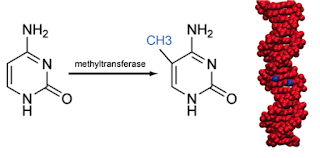
Bismark is currently the de facto standard for primary analysis of high throughput bisulfite sequencing data. Bismark can align the reads to the genome and perform methylation calling. In this post, I'll go through Illumina whole genome bisulfite sequence (WGBS) alignment and methylation calling using Bismark. First I want to mention that this post is just a summary, not meant to be a user manual or thorough troubleshooting guide. Fortunately, Bismark has some of the best documentation for any bioinformatics suite and is mandatory reading. The Bismark crew are very proactive with responding to user queries on various forums as well.

First step in getting Bismark to work is to index the genome, in this case with Bowtie2:

bismark_genome_preparation --bowtie2 /pathto/refgenome/

Conventionally, multiplexed libraries will be sequenced over a number of lanes. Resist concatenating or merging the smaller fastq files for each patient/sample until after the alignment, as the concatenated fil…

Regulation of gene expression by long non-coding RNAs

Image
Gene regulation is a really complicated thing. We have covalent marks to DNA, histones and transcription factors. Chromatin remodeling and long range enhancer interactions. Enhancer elements located in introns of genes hundreds of kilobases away from the gene they're controlling. Transcriptional control from microRNA networks and now there is an emerging model for the function of some of the thousands of long non-coding RNAs which are just now being uncovered with high resolution (directional) transcriptome analysis.

Many of you which studied molecular biology at Uni would (should) remember the model for how X chromosome inactivation is achieved. The mechanism centers around XIST, one of the first non-coding RNA genes identified. Expression of XIST from the inactive X chromosome essentially wraps it up at the same time that repressive epigenetic marks are established through its interaction with the Polycomb Repressive Complex 2 (PRC2). Sounds simple enough, but the model also inv…

Paper of the week - Cooperative epigenetic effect of TETs and OGT

Image
There have been a number of high profile profile articles in recent times discussing the function of TET proteins, mostly in the conversion of methylated cytosine (5mC) into hydroxymethylated cytosine (5hmC), the 5th base. Hydroxymethylcytosine is much rarer than methylcytosine and is thought to be an intermediate towards demethylation of cytosine, a mechanism which remains incompletely resolved. A paper last year showed that TET proteins also convert 5hmc to 5-formylcytosine (5fC) and 5-carboxylcytosine (5caC), termed the 6th and 7th bases.


OGT on the other hand is a fairly unique protein because it is the only known known O-GlcNAc transferase in mammals. What is GlcNAc you say? It stands for N-acetylglucosamine, a hexosamine. There has been a series of papers (here, here, here) discussing OGT as a nutrient sensor, transferring GlcNAc during period of surplus nutrient supply. GlcNAc can be transferred to the same amino acids as phosphorylation, so there is a suggested crosstalk betwee…

Paper of the week - Role of Selfish DNA in Evolution

Its no secret that repeat DNA makes up the majority of the genome in a majority of "higher" eukaryotes. For a long time this repeat DNA has been considered "selfish" or "parasitic" DNA, its only feature was its prolific self-propagation as it hitchhiked a ride throughout evolutionary history at the energetic expense of the host.

Nina Fedoroff argues in a recent review in Science that these transposable elements are not "junk" at all, and in fact they play "a profoundly generative role in genome evolution" where the transposons provide novel mechanisms to generate genetic diversity. Nina explores the relationship between genome size and epigenetic complexity in the comparison of eukaryotes and prokaryotes, postulating that the innovation of epigenetic elaborate control mechanisms in bacteria paved the way for increases in genome size and complexity we see in eukaryotes. So rather than epigenetic mechanisms evolving to keep "parasit…